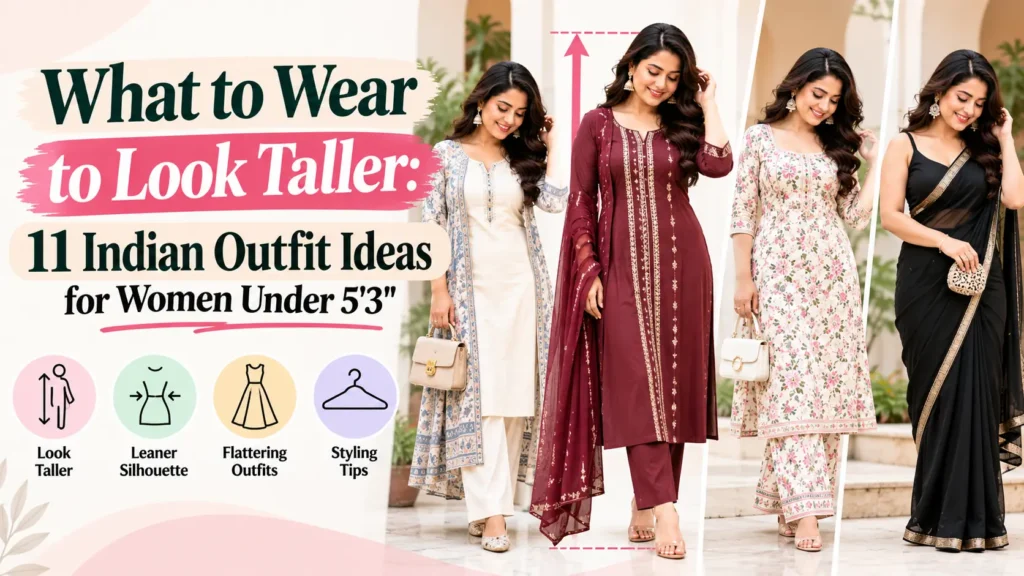
What to Wear to Look Taller: 11 Indian Outfit Ideas for Women Under 5’3
Introduction
Have you ever loved a kurta on a model, then found that its length or volume felt different when you tried it on? The answer usually isn’t to avoid a style you love. It’s to look at how the pieces fit together.
If you’re under 5’3, you can wear kurtas, palazzos, Anarkalis, sarees and lehengas. Start with proportion, comfort and the way a garment falls on your own body—not a rigid list of rules. These 11 Indian outfit ideas offer practical starting points you can adapt to your taste.
What works well for petite Indian outfits?
Try coordinated colours for visual continuity, trousers that finish neatly, comfortable waistlines and layers that don’t overwhelm the outfit. None of these is compulsory; the best choice is the one that feels balanced and lets you move comfortably.
Outfit formula: Sage kurta + matching straight pants + coordinated dupatta.
Similar shades create a connected look without requiring an exact matching set. Try ivory with cream, dusty rose with mauve, or navy with a softer blue. Keep the trouser hem neat and choose a dupatta that drapes without bunching around the waist.
Best for: Office days, family lunches and everyday ethnic wear.
2. A straight kurta with straight trousers
Outfit formula: Straight kurta + straight trousers + simple flats or sandals.
This is a versatile option for work or errands. Check where the kurta hem lands on you and whether the trouser length works with your shoes. If fabric gathers at the ankle or pulls at the hip, try another size, cut or alteration rather than forcing the fit.
Best for: A clean, polished everyday look.
3. A short kurti with high-rise trousers
Outfit formula: Hip-length kurti + high-rise trousers + small earrings.
A shorter top paired with a higher waistband can make the waistline more defined. If you prefer more coverage, choose a kurti that skims the hip rather than clinging to it. Balance a relaxed top with trousers that hold their shape.
Best for: Casual outings and Indo-Western styling.
4. An A-line kurta with straight pants
Outfit formula: Gently flared A-line kurta + straight pants + a light dupatta.
An A-line shape gives room through the hem while keeping the outfit relatively streamlined. Look for a flare that moves comfortably instead of adding so much fabric that it feels cumbersome.
Small prints, large prints and solid colours can all work. Choose what you genuinely enjoy wearing.
Best for: Everyday wear when you want movement without a very full silhouette.
5. An Anarkali with a well-fitted bodice
Outfit formula: Anarkali + well-shaped bodice + understated accessories.
Anarkalis are not off-limits for petite frames. Pay attention to shoulder fit, bodice length and skirt volume. If the dress is long, check its hem with the footwear you plan to wear. A tailor may be able to adjust the length while preserving the design.
Best for: Festive gatherings and family celebrations.
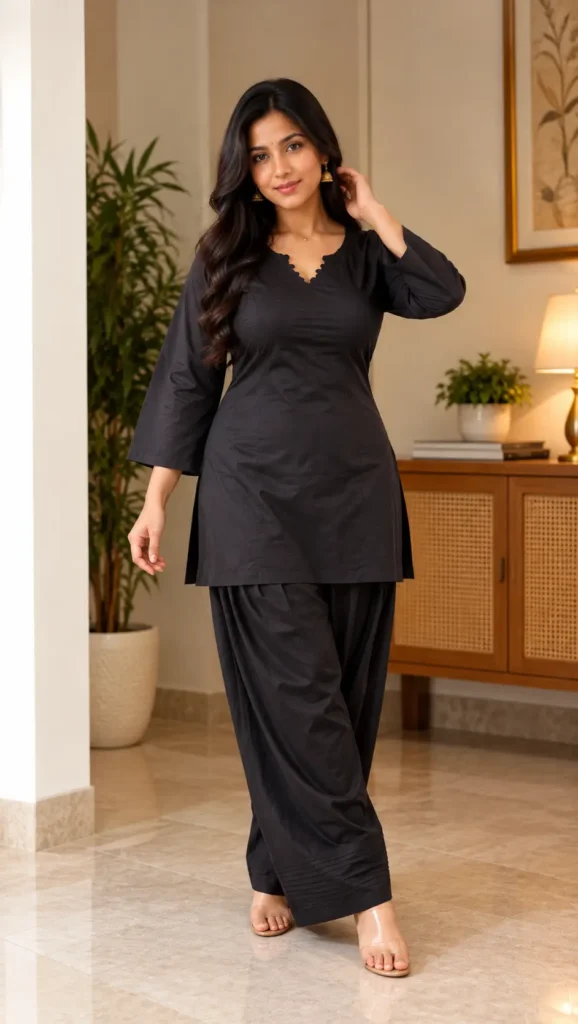
6. A kurta with wide-leg palazzos
Outfit formula: Kurta that works with the waistband + fluid palazzos + a comfortable waistline.
Wide-leg trousers can look elegant when their fabric drapes instead of standing stiffly away from the body. Try a kurta that doesn’t compete with the volume of the palazzos, and make sure the waistband sits comfortably.
You don’t need to avoid wide legs; focus on fabric, fit and length.
Best for: Relaxed festive looks and breathable summer outfits.
7. A saree with a tidy drape
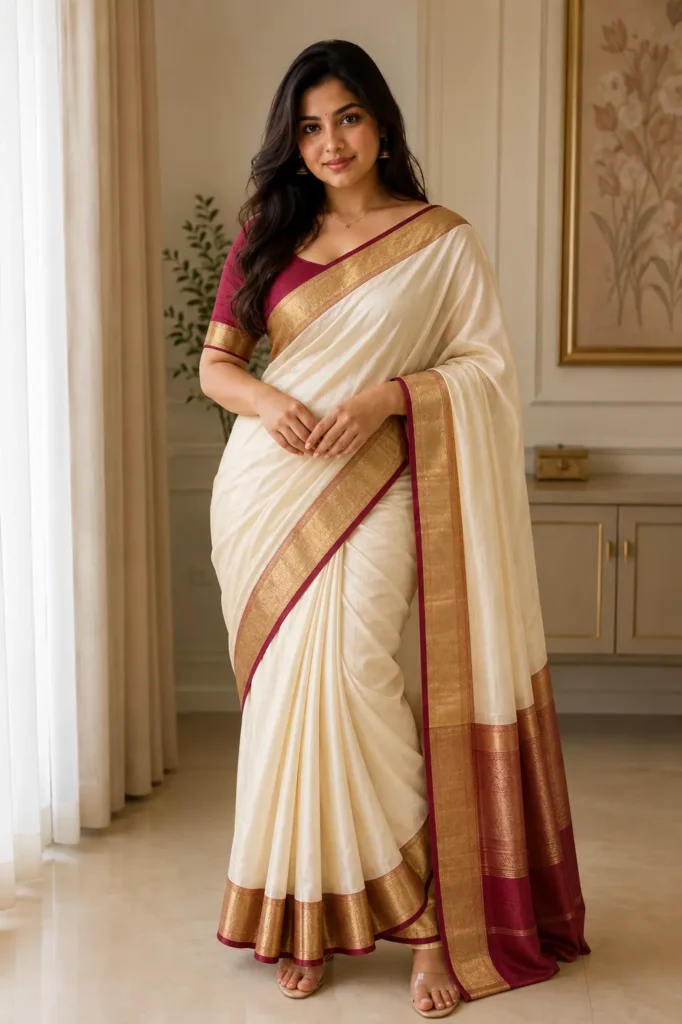
A saree’s overall effect depends on fabric weight, border width, pleats and drape—not height alone.
Try this: Secure the pleats, arrange the pallu to suit your comfort, and check the saree with your intended blouse and footwear. Lightweight or fluid fabrics may be easier to manage, while a heavy border can become the main visual feature.
There is no universal saree style that every petite woman must follow. The goal is a drape you enjoy wearing and can move in comfortably.
8. A lehenga with balanced blouse proportions
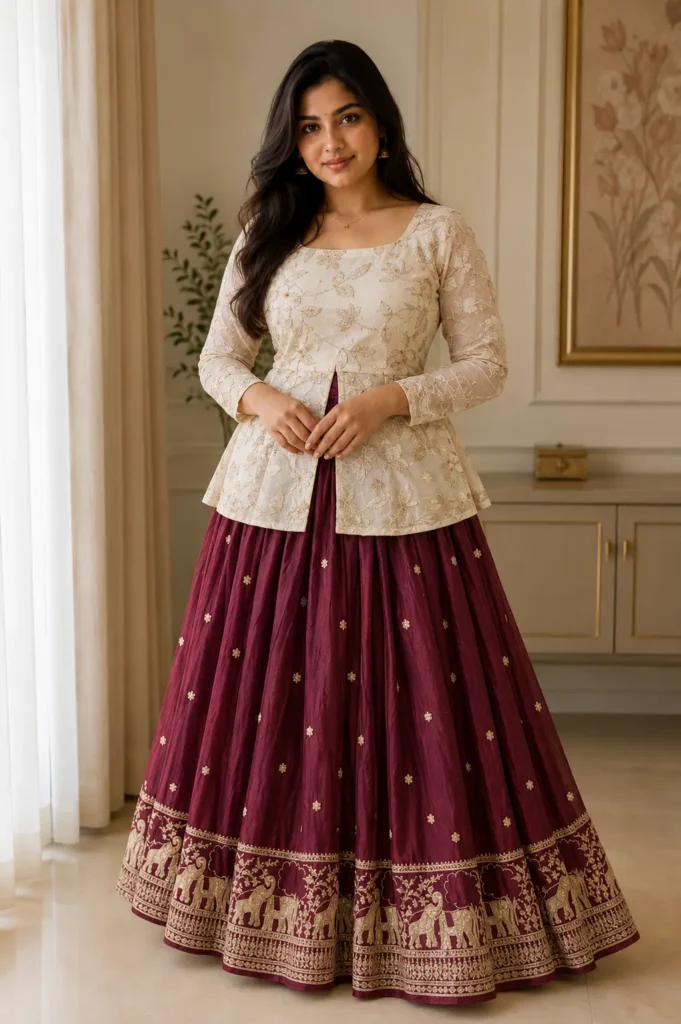
Outfit formula: High-waisted lehenga + comfortable blouse length + intentionally placed dupatta.
Choose a waistband that sits where you feel comfortable, then check how the blouse and skirt work together. A voluminous skirt can feel dramatic; a lighter skirt may be easier to walk and dance in. Both are valid choices.
Have the hem checked with the shoes you’ll actually wear.
Best for: Weddings, receptions and festive parties.
9. A coordinated salwar suit
Outfit formula: Salwar or straight pants + kurta + dupatta in complementary colours.
Matching or related colours help the outfit feel intentional. For a relaxed look, keep the dupatta’s folds manageable and make sure the bottoms don’t drag on the floor.
If you love a traditional, roomy salwar, wear it. The aim is to find a proportion and fit that feels right to you.
10. A longline jacket over a simple base
Outfit formula: Solid kurta-and-pants set + open longline jacket or lightweight ethnic layer.
A long layer can add movement and structure. Choose one that hangs comfortably and doesn’t restrict your stride. If the jacket is heavily embroidered or voluminous, keep the base simpler so the outfit has a clear focal point.
Best for: Fusion outfits, dinners and festive occasions.
11. A kurti with jeans
Outfit formula: Short or mid-thigh kurti + straight or slim-straight jeans + comfortable footwear.
This easy fusion outfit works for college, casual meet-ups and travel. Try different kurti lengths with your jeans rather than assuming one length suits everyone.
Make sure the jeans fit at the waist and hips and finish neatly at the shoe.
A simple outfit comparison guide
| Occasion or preference | Outfit to try |
|---|---|
| Everyday wear | Tonal kurta set or straight kurta with trousers |
| Relaxed silhouette | A-line kurta or fluid palazzos |
| Celebrations | Anarkali, saree or lehenga |
| Modern ethnic look | Short kurti with high-rise trousers |
| Casual outing | Kurti with jeans |
| Layered styling | Kurta set with a longline jacket |
Common styling mistakes to avoid
- Buying from a photo alone: Check garment measurements, fabric details and the size chart.
- Ignoring the hem: Trousers or skirts that drag can be uncomfortable and may need alteration.
- Treating petite styling as a list of restrictions: Heels, tiny prints and short kurtas are options, not requirements.
- Choosing a poor fit for the silhouette: Clothes should allow you to sit, walk and move comfortably.
- Overlooking alterations: A simple adjustment can sometimes make a favourite outfit work much better.
Your petite-fashion shopping checklist
Before buying an outfit, ask yourself:
- Does the garment length work with my proportions?
- Can I sit, walk and move comfortably?
- Does the fabric fall the way I want it to?
- Have I considered the shoes I’ll wear with it?
- Would a small alteration improve the fit?
- Do I actually like the style, rather than just following a trend?
Final thought
Being petite doesn’t mean dressing to disappear or following a narrow set of fashion rules. Start with clothes you love, notice how their lengths and shapes work together, and alter pieces when it helps.
The best outfit is one that feels comfortable, considered and unmistakably yours.
Frequently asked questions
What should petite women wear with kurtas?
Straight trousers, palazzos, leggings or jeans can all work. Match the bottom to the kurta’s cut, fabric and the look you want.
Can women under 5’3″ wear Anarkalis and lehengas?
Yes. Check the bodice fit, skirt volume and hem length, and tailor the garment if needed.
Are long kurtas suitable for petite women?
Absolutely. The best length depends on your proportions, the garment’s cut and how you want it to look.
What is the most important petite styling tip?
Focus on fit and proportion rather than following strict rules. Try the complete outfit and adjust whatever feels uncomfortable or unbalanced.